Article Number: 08010453
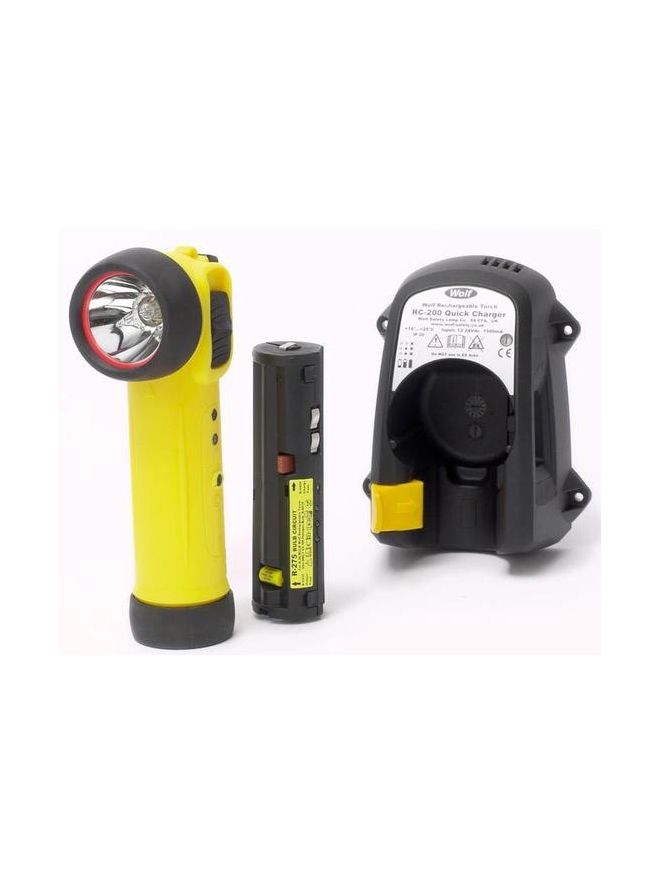
The Wolf R-50 is a next-generation rechargeable flashlight that combines high light output and durability for professionals working in hazardous areas. Offered by IST Safety Ltd, the official distributor of Wolf, this model replaces older generations of rechargeable lamps with a technologically optimized design and extended service life.
The product holds the I M2 (Mining) certification for risky zones in underground mines, as well as approvals for industrial hazardous environments (Zone 1/21). While providing a lightweight build thanks to Lithium-ion battery technology, it offers maximum visual clarity in the darkest and most risky areas with its 243-lumen light output.
Ex ib I Mb / IIC T4 Gb (-20°C/-30°C/-40°C ≤ Ta ≤+40°C)
Ex ib IIIB T200°C Db
|
Product Reference |
R-50 |
R-55 |
|
|
Product Description |
Rechargeable Right Angle Safety Torch |
||
|
Zone 1 LED |
Zone 0 LED |
||
|
Code |
I M2/II 2GD Ex ib I Mb/IIC T4 Gb (-40°C≤ Ta≤+40°C) |
I M1/II 1G2D Ex ia I Ma/IIC T4 Ga (-40°C ≤ Ta≤40°C) |
|
|
Ex ib IIIB T200°C Db IP67 |
Ex ib IIIB T200°C Db IP67 |
||
|
Type of Protection |
'ib' intrinsic safety |
'ia' intrinsic safety |
|
|
Area of Classification (Gas) |
Zones 1 & 2 |
Zones 0, 1 & 2 |
|
|
Gas Groups IIA, IIB and IIC |
Gas Groups IIA, IIB and IIC |
||
|
Temperature Class (Gas) |
T4 |
||
|
Area of Classification (Dust) |
Zones 21 & 22 |
||
|
Dust Groups IIIA and IIIB |
|||
|
Max. Surface Temp. (Dust) |
T200°C |
||
|
Ambient Temperature |
-40°C to +40°C |
||
|
Certificate |
Baseefa05ATEX0069X / IECExBAS06.0001X / BAS21UKEX0438 |
||
|
Enclosure |
Impact Resistant Thermoplastic, Chemical Resistant, Static Dissipative |
||
|
Lens |
Toughened Glass 4mm |
||
|
Beam Type |
High Output Spot Beam |
||
|
Light Source: |
Type |
High Power LED |
|
|
Watts |
3 Watts |
||
|
Output |
High Power - Up to 300lm / Low Power - Up to 172lm |
||
|
Life |
25,000hrs+ (Fitted For Life) |
||
|
Power Source: |
Part No. |
R-271 |
|
|
Type |
Rechargeable Battery, Lithium-Ion |
||
|
Volts |
7.4V |
||
|
Capacity / Life |
2.4Ah / Up to 500 Recharge Cycles |
||
|
Light Duration |
High Power - Up to 3.5hrs / Low Power - Up to 6.5hrs |
||
|
Ingress Protection |
IP67 |
||
|
Weight (inc. cells) |
0.375 Kg |
||
|
Chargers |
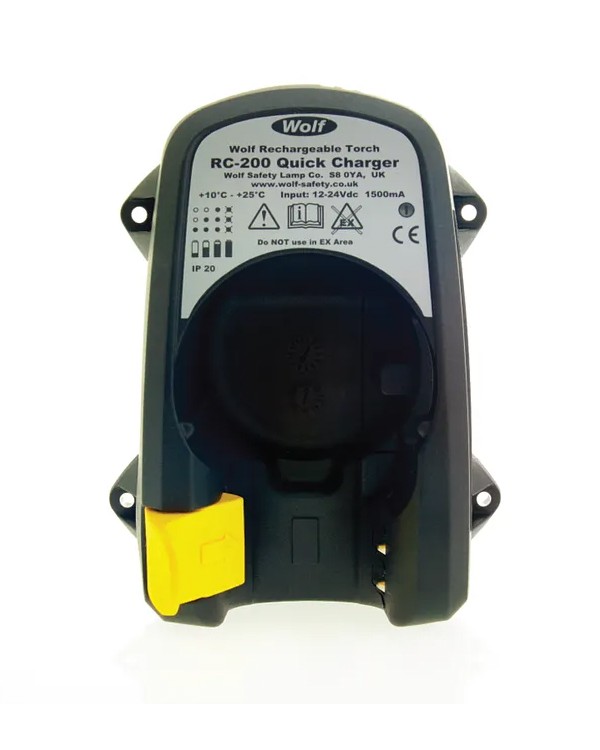
12-24Vdc RC-200L / 90-264Vac RC-200H |
||
|
Recharge Time |
3.0 hours (90% in 1.5 hours) |
||
|
Product Reference |
R-50 |
R-55 |
|
What is ATEX and what does exproof mean? The ATEX directive is a set of European Union standards that define the safety requirements for equipment used in hazardous areas with explosive atmospheres. Exproof (Explosion-proof) refers to protection methods designed to prevent explosions by inhibiting the formation of sparks or electrical arcs in environments containing flammable gases, dust, or vapors. To ensure life and property safety in industrial facilities, the use of ATEX-certified exproof devices is a legal requirement.
ATEX Zone coding is a technical classification based on the frequency and duration of the occurrence of an explosive atmosphere in a given area. While the terms Zone 0, 1, and 2 are used for risks originating from gas, vapor, and mist; the codes Zone 20, 21, and 22 are designated for environments containing combustible dust. This classification is a legal standard that determines the required Equipment Protection Level (EPL) for devices. Accurate zone identification both optimizes operational costs and minimizes occupational safety risks.
In addition to ATEX certification, some projects may also require the IECEx Certification System (International Electrotechnical Commission Explosive Atmospheres System) certification. IECEx is an internationally recognized conformity assessment system for equipment intended for use in explosive atmospheres.
While ATEX is a European Union directive and a legal requirement within the European market, IECEx is a globally accepted certification system, widely preferred in regions such as the Middle East, Asia, and Australia.
From a technical perspective, both ATEX and IECEx are based on similar standards (e.g., the EN/IEC 60079 series). However:
Therefore, while ATEX certification may be sufficient for certain projects, international tenders or critical industries such as oil & gas often prefer or require products that are certified to both ATEX and IECEx standards.
The appropriate certification should be determined based on the project location, client requirements, and application area.